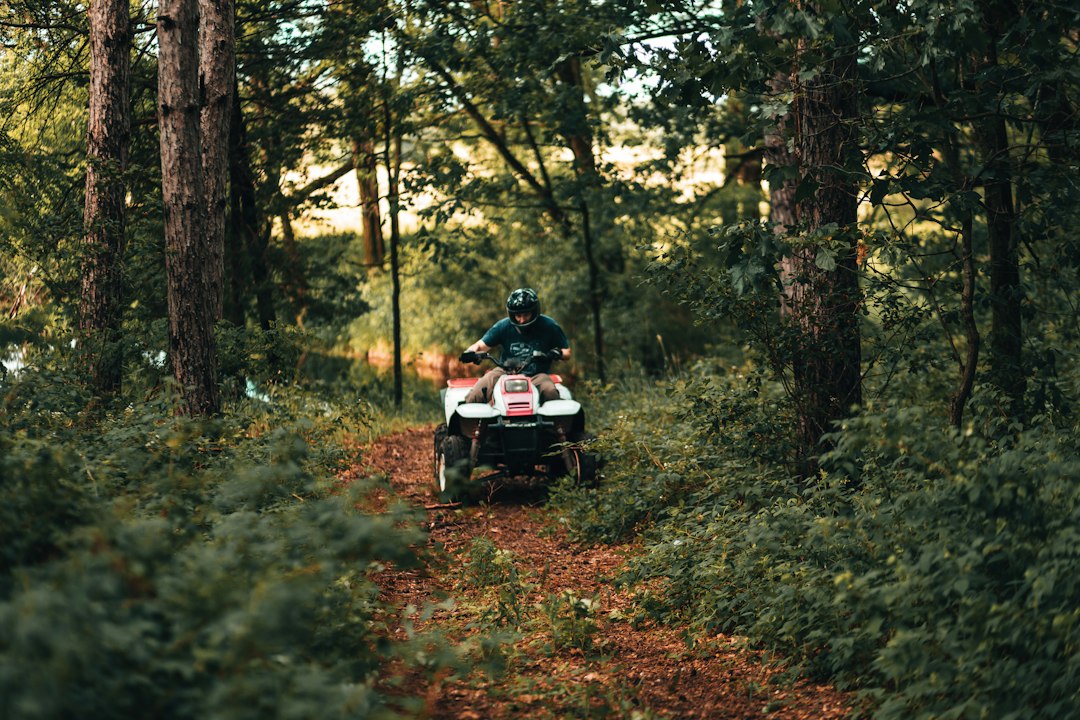

Think honestly about your usual terrain. Soft mud and loose sand need a tread that can dig in and clear debris, while compact dirt, gravel and grass call for predictable grip without excessive ground disturbance. A rider who spends weekdays checking fences and weekends exploring forest trails may need an all-round pattern rather than a specialist mud tyre. Tread pattern means the arrangement of the raised blocks and grooves across the surface. Larger gaps between blocks, often called voids, give mud and soil somewhere to escape, whereas closely spaced blocks can feel smoother and more controlled on firmer ground.
Fitment deserves the same attention as tread. Tyre sizing normally combines width, sidewall height and rim diameter, so a change in one measurement can affect steering, clearance and gearing. Check that the replacement will not rub the suspension, guards or bodywork through the full range of movement. Also compare the load rating, which indicates the weight the tyre is designed to carry, with the ATV’s requirements. For example, a utility machine carrying tools and a sprayer needs a different margin from a lightly loaded recreational quad. A seller who checks these details is more useful than one who simply recommends the largest available size.
Construction changes how an ATV tyre responds. Bias-ply tyres use overlapping layers running diagonally across the casing, while radial tyres use a different layer arrangement that can provide a more flexible footprint and distinct handling characteristics. The footprint is the area of rubber touching the ground. A longer or wider footprint may spread weight over soft soil, but it can also alter steering feel and resistance. Sidewall strength matters on rocky routes because the sidewall is the tyre’s outer support between the tread and rim. Ask which construction suits your speed, load and terrain instead of assuming one type is universally better.
Consider how the tread behaves on the surface you ride most. A directional pattern has a preferred rolling direction and should be fitted as marked, because reversing it can change how it sheds water and loose material. Deep lugs may provide useful drive in wet ground, but they can vibrate more on sealed roads and wear unevenly if pressures or alignment are neglected. A flatter, more closely spaced pattern may be calmer for short road connections. Imagine two riders: one pulls a trailer across pasture, while the other climbs rutted trails. Both need traction, but their priorities are stability, rolling comfort and self-cleaning ability in different proportions.
The provider you choose should make comparison straightforward. Look for clear sizing information, construction details, availability and sensible guidance on whether a tyre is intended for front, rear or multi-position use. Advice is especially valuable if you are changing size, mixing patterns or replacing only one axle. Read the vehicle handbook before relying on general recommendations, and ask about fitting, valve condition and disposal of the old casings. Independent specialist tyre buying advice can help narrow the field, but the final choice still needs to match your particular machine and working conditions.
Before ordering, inspect the current tyres for scalloped wear, cracking, punctures and exposed cords. Uneven wear can point to incorrect pressure, worn components or regular use on a surface that does not suit the pattern, so a new set may not solve the underlying issue. Set cold pressures according to the ATV maker’s guidance and recheck them after the machine has been working, allowing for normal pressure change with heat. Choose a versatile all-terrain design for mixed use, a deeper open tread for predominantly soft ground, or a tougher utility pattern where loads and sharp stones are routine. That approach keeps the decision tied to real use rather than appearance alone.